
The Weight We Don’t Always See
Many BIPOC and first-generation individuals carry stories of survival that didn’t begin with them — stories of migration, loss, discrimination, and resilience.
Even if we never lived those experiences ourselves, their emotional echoes often live in our bodies.
You may find yourself feeling anxious in safe spaces, guilty for resting, or hyper-aware of others’ expectations. These aren’t random — they’re the body’s way of remembering what your family once had to endure to stay safe.
What Is Generational Trauma?
Generational trauma happens when the emotional wounds of one generation are unconsciously passed down to the next.
It might show up as:
A deep fear of failure or being judged
Difficulty setting boundaries with family
Feeling responsible for everyone’s emotions
Struggling to rest without guilt
A constant sense of needing to prove yourself
These experiences are common for children of immigrants and BIPOC individuals who grow up navigating two worlds — the one they were born into and the one they had to adapt to.
“We inherit not only our ancestors’ strength — but sometimes their survival patterns, too.”
How EMDR Therapy Can Help
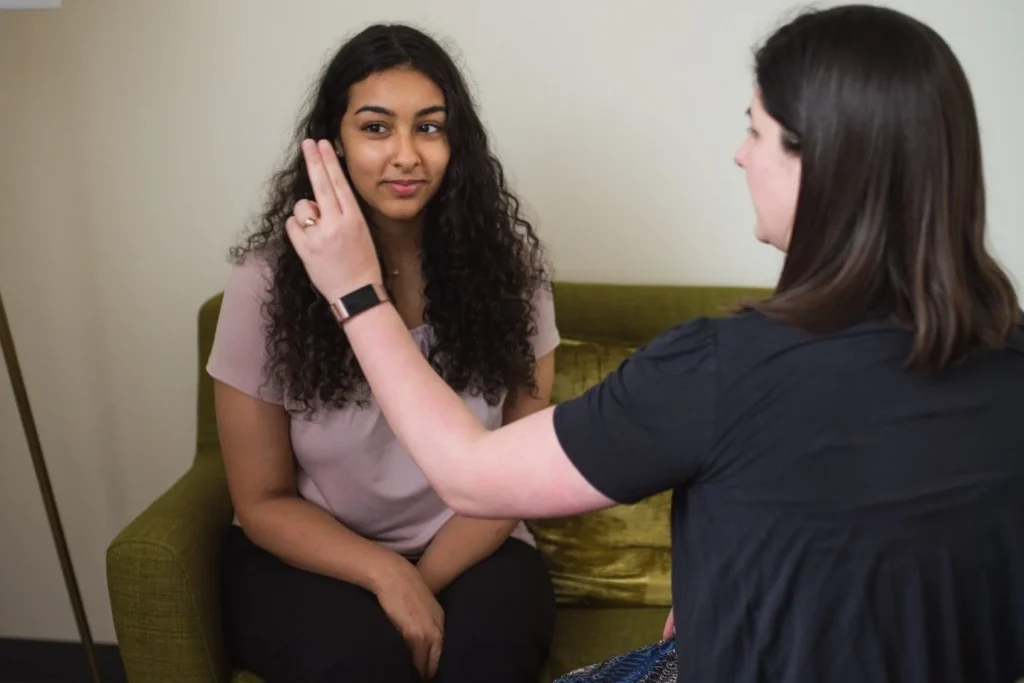
EMDR therapy works by helping your brain reprocess painful memories or beliefs that have been stored as truth.
For example, a belief like “I’m only worthy if I’m perfect” might not have started with you — it might come from generations who had to be perfect to stay safe, accepted, or respected.
Through EMDR, we target these beliefs and allow your brain to form new, more balanced connections — ones rooted in safety, worthiness, and self-compassion.
EMDR Helps BIPOC Clients:
Process inherited fears and emotional triggers
Reclaim agency after experiences of racism or marginalization
Rebuild a sense of belonging while honoring cultural roots
Release survival patterns that no longer serve you
Instead of carrying your ancestors’ pain, EMDR helps you carry their strength.
Why Cultural Sensitivity Matters in Trauma Work
For BIPOC clients, healing requires more than clinical skill — it requires cultural understanding.
A therapist who acknowledges how culture, faith, and family roles shape identity creates a space where you don’t have to explain your background to be understood.
In my practice, I integrate EMDR with a multicultural and trauma-informed lens, helping clients explore identity, family patterns, and belonging without judgment.
Reclaiming Safety — On Your Own Terms
Healing generational trauma doesn’t mean rejecting your culture — it means integrating it.
You can honor your family’s sacrifices while also choosing peace, balance, and emotional freedom for yourself.